Engineering That Connects Theory To Industrial Practice

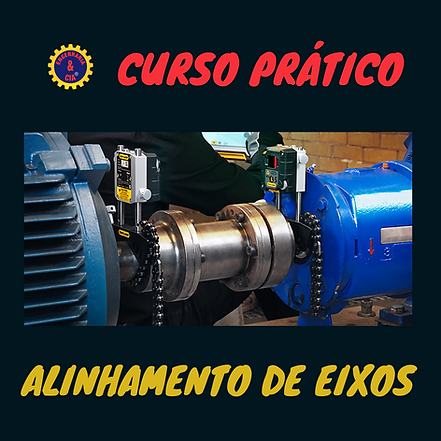
Aprenda como resolver problemas de pé manco no nosso curso:
Conteúdo da Aula

Our Youtube Channels


O QUE É PÉ MANCO EM EQUIPAMENTOS INDUSTRIAIS
No universo da manutenção industrial, um problema que pode parecer simples à primeira vista, mas que pode gerar consequências graves, é o "pé manco" em equipamentos. Esse termo se refere a uma condição em que um dos pés do equipamento não encosta corretamente na superfície onde ele está instalado.
Para entender melhor, imagine uma cadeira com quatro pernas. Se uma das pernas for mais curta ou mais longa, a cadeira não vai se apoiar de forma estável. O mesmo ocorre com máquinas e equipamentos industriais: se um dos pés não estiver bem apoiado, o equipamento fica instável e isso pode levar a problemas graves, como vibrações e desalinhamentos.
Existem duas principais situações que caracterizam o pé manco:
Pé não encostando no solo: Quando, por exemplo, três pés estão firmes e um deles está suspenso. Isso faz com que o equipamento fique "dançando" ou instável.
Parafuso solto: Mesmo com os quatro pés apoiados, se um dos parafusos estiver solto, ele pode causar um desbalanceamento que também é classificado como pé manco.
O problema se agrava quando, ao apertar os parafusos do pé manco, o equipamento sofre uma distorção. Isso compromete o alinhamento, já que o eixo de rotação pode ser alterado, gerando desalinhamento e consequente desgaste prematuro de componentes.
Para corrigir o pé manco, especialmente quando ele é identificado de forma clara, a solução mais comum é a utilização de cálcios (calços) para preencher o espaço e estabilizar o equipamento. No entanto, existem casos mais complexos, como o pé manco em cunha, onde o apoio está em ângulo. Nesse caso, é preciso utilizar técnicas como o escalonamento de calços ou o uso de resina epóxi para preencher e estabilizar o pé corretamente.
Outra alternativa, mais definitiva, é o reusinamento da base do equipamento ou até mesmo da estrutura onde ele será instalado. Contudo, essa é uma solução mais trabalhosa e custosa, exigindo a retirada do equipamento e sua posterior reinstalação.
Por fim, é essencial sempre verificar a existência de pé manco antes de realizar o alinhamento de um equipamento. Corrigir esse problema é um passo fundamental para garantir o bom funcionamento e a longevidade dos componentes mecânicos.
Meet the Teacher
🎓 Academic Backgroung:
- Mechanical Engineer from UNIFEI (Federal University of Itajuba)
- Master in Nuclear Technology from USP/IPEN (University of São Paulo - Nuclear and Energy Research Institute)
- Specialist in Higher Education Didactics (Uniderp)
🏭 Professional Experience
- Over 20 years in the pump and industrial equipment sector
- Technical consultant and instructor at OMEL, Vallair, and Embraseal
- Experience in technical sales and applications, and both in-person and online training.
👨🏫Teaching Career:
- Over 25 years as a lecturer
- Former university professor of Mechanical Engineering in São Paulo
📈 Engenharia & Cia
- Founder of the Engenharia & Cia Youtube channel, now with over 50,000 subscribers
- Trained more than 1,200 students
- Creator of the pump sizing software.


Pump Specification: Much More Than Just Sizing
Pump specification is a fundamental step in the design and operation of hydraulic and industrial systems. Although it is often confused with the sizing of the pumping system, specification goes far beyond simply calculating flow rate and total dynamic head.
It involves selecting pumps that precisely meet the needs of the application, considering technical, operational, and even economic variables.
Pumping System Sizing: The First Step
The sizing of the pumping system is, without a doubt, the foundation for beginning the specification process. At this stage, information such as the following is gathered:
-
Desired flow rate
-
Total dynamic head (TDH)
-
Piping characteristics (diameter, length, head losses)
-
Fluid properties (density, viscosity, temperature, presence of solids, etc.)
-
With this data, it's possible to draw the system curve and identify the ideal operating range for the pump.
Pump Specification: Choosing the Right Pump for the Application
But the key question goes further: is the correctly sized pump truly the right pump for the application?
This is where pump specification comes in, analyzing, among other factors:
-
Most suitable pump type (centrifugal, positive displacement, peristaltic, pneumatic, etc.)
-
Compatibility with the pumped fluid (abrasiveness, corrosiveness, toxicity)
-
Operation frequency (continuous or intermittent)
-
Ease of maintenance
-
Noise and vibration levels
-
Energy efficiency
-
Industry or process-specific standards and requirements
A properly sized pump may still be inadequate if, for example, it’s not compatible with the fluid’s viscosity, cannot withstand the system pressure, or lacks the durability required for the application.
Pump Selection with Technical and Strategic Insight
Pump selection must also take into account strategic aspects such as:
-
Availability of spare parts and technical support
-
Total cost of ownership (TCO)
-
Integration with control and automation systems
-
Sustainability standards and energy consumption
By combining pumping system sizing with a deep analysis of technical and operational requirements, pump specification ensures the selected equipment fully meets process demands, avoiding issues like premature failures, excessive energy consumption, and low efficiency.
Conclusion
Pump specification is a multidisciplinary task that requires technical knowledge, a systemic view, and field experience. It is not limited to pumping system sizing, but rather involves selecting pumps that truly deliver performance, reliability, and operational safety.
By investing time and attention in this step, you avoid rework, reduce costs, and improve the overall efficiency of your system.
Learn every step for properly sizing and selecting pumps with our course: SPECIFICATION OF PUMPS – CLICK HERE TO LEARN MORE.